

25 Best Things to Do in Manhattan
The best things to do in Manhattan depend heavily on which neighborhood you’re standing in — Midtown gives you Times Square and the Empire State Building, Lower Manhattan gives you Wall Street and One World Observatory, and the Upper West Side gives you the American Museum of Natural History and Lincoln Center. Manhattan is only 13.4 miles long, but its 20-plus distinct neighborhoods each function almost like separate small cities. This guide organizes things to do in Manhattan by area, so you’re not zigzagging across the island wasting half your trip in transit. You’ll get real pricing, a 3-day itinerary, and a few genuinely lesser-known spots most guides skip.
Table of Contents
- Quick Answer: Top 10 Things to Do in Manhattan
- Midtown Manhattan
- Lower Manhattan & Financial District
- Downtown Neighborhoods (SoHo, Tribeca, Greenwich Village, Chelsea)
- Upper East Side and Upper West Side
- Harlem
- Free Things to Do in Manhattan
- Hidden Gems in Manhattan
- Comparison Table: Cost, Time Needed, Best For
- Sample 3-Day Manhattan Itinerary
- Practical Tips Before You Go
- Frequently Asked Questions
- Final Takeaway
Quick Answer: Top 10 Things to Do in Manhattan
If your time is limited, prioritize these:
- Central Park — free, and the fastest way to reset between attractions
- Empire State Building or SUMMIT One Vanderbilt — pick one skyline view, not both
- The Metropolitan Museum of Art — allow a minimum of three hours
- Times Square at night — go once, briefly
- The High Line — a quieter alternative walking route through Chelsea
- One World Observatory — pair with the 9/11 Memorial next door
- MoMA — the strongest modern art collection in the city
- Chelsea Market — food and browsing under one roof
- A Broadway show — book through official box offices
- Washington Square Park — the heart of Greenwich Village’s street life
Full breakdown by neighborhood is below.
Midtown Manhattan
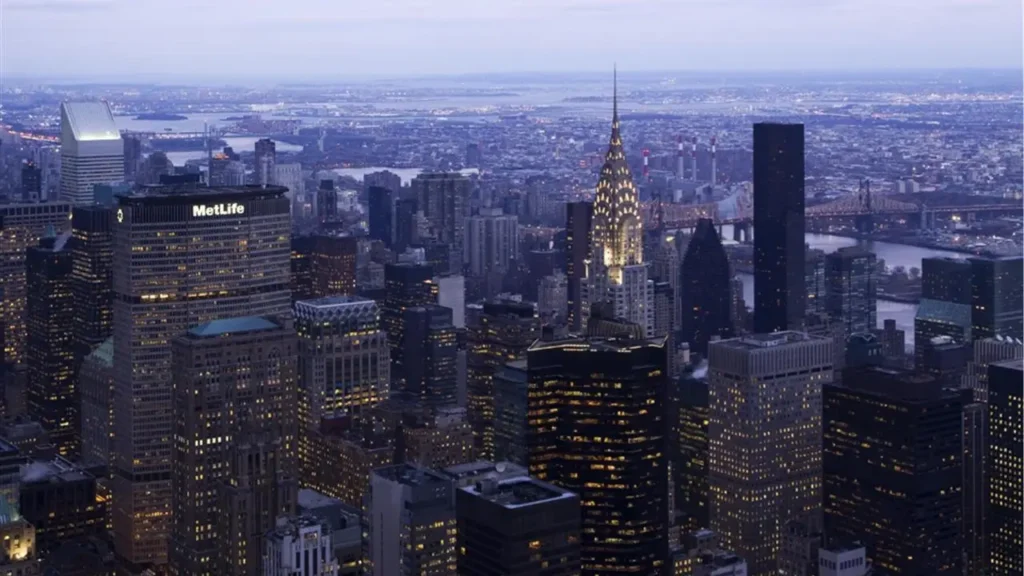
Midtown is Manhattan’s commercial and tourist core, stretching roughly from 34th Street to 59th Street, and it holds more single-visit landmarks per block than anywhere else on the island. The Empire State Building’s 86th-floor observatory remains the classic choice for skyline views, while SUMMIT One Vanderbilt — a newer, mirror-and-art installation-style observation experience near Grand Central — has become a genuine alternative for visitors who want something less traditional. Rockefeller Center sits a short walk away, home to the Top of the Rock observation deck and, in winter, the ice rink.
Grand Central Terminal is worth five minutes even if you’re not catching a train — its main concourse ceiling is hand-painted with a celestial mural. Bryant Park, tucked behind the New York Public Library, runs free outdoor movie screenings in summer and an ice rink with free admission (skate rental costs extra) in winter.
Insider tip: Fifth Avenue between 49th and 60th Streets doubles as a free architecture walk even if you skip the shopping entirely.
Times Square and Broadway
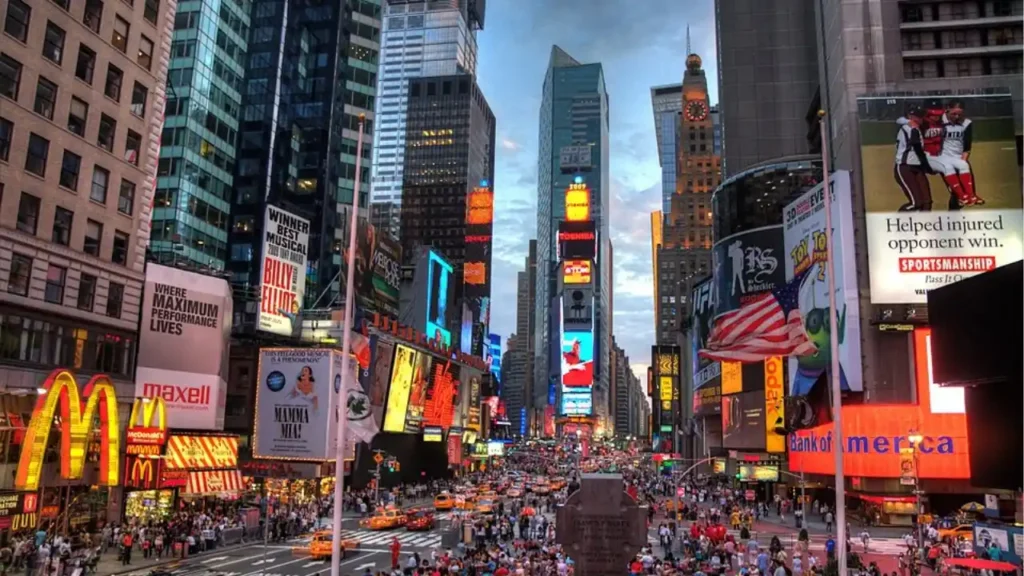
Times Square is genuinely worth seeing once after dark, when the billboards light the whole block — most first-time visitors are surprised how small the actual square is compared to photos. The Broadway theater district sits just west of Times Square along 41st-54th Streets, with over 40 active theaters; the TKTS booth sells same-day tickets at 20-50% off for shows with unsold seats.
Lower Manhattan & Financial District
Lower Manhattan is where the city began — the Financial District around Wall Street still holds the physical New York Stock Exchange building, though it’s not open for public tours. One World Trade Center anchors the neighborhood both physically and symbolically, and its One World Observatory on the 102nd floor gives the highest observation deck view in the Western Hemisphere. The 9/11 Memorial’s twin reflecting pools sit at street level next door and are free to visit.
Battery Park, at the island’s southern tip, is where ferries to the Statue of Liberty and Ellis Island depart. On a clear day you can see New Jersey, Brooklyn, and the harbor islands from the same spot.
Downtown Neighborhoods
SoHo and Tribeca
SoHo is known for cast-iron 19th-century architecture and dense independent boutique shopping, while Tribeca — just south — has a quieter, more residential feel with some of Manhattan’s best-reviewed restaurants. Both are easily walkable in a single afternoon, and neither requires a paid attraction to enjoy.
Greenwich Village
Greenwich Village centers on Washington Square Park, with its landmark arch and a long history as a gathering spot for street musicians and chess players. The neighborhood’s tree-lined streets and jazz clubs make it a strong pick for an evening walk rather than a daytime checklist stop.
Chelsea
Chelsea is home to the High Line — a 1.45-mile elevated park built on a former freight rail line — and Chelsea Market, a converted 19th-century factory now filled with food vendors and small shops. The two connect easily: start at Chelsea Market, walk the High Line north toward Hudson Yards.
Upper East Side and Upper West Side
The Upper East Side is Manhattan’s “Museum Mile” stretch along Fifth Avenue, anchored by the Metropolitan Museum of Art, which holds over two million works spanning 5,000 years and genuinely can’t be fully seen in one visit. General admission for non-New York residents is $30; New York State residents can pay what they wish.
The Upper West Side, across Central Park, is home to the American Museum of Natural History — famous for its dinosaur halls and the Rose Center for Earth and Space — and Lincoln Center, the city’s main performing arts complex for opera, ballet, and classical music.

Harlem
Harlem, north of Central Park, is one of Manhattan’s most historically significant neighborhoods, central to the Harlem Renaissance of the 1920s. A gospel service at one of its historic churches on a Sunday morning is a genuinely different Manhattan experience from anything downtown, and the neighborhood’s soul food restaurants are consistently rated among the city’s best. It’s an easy subway ride from most Midtown hotels — no need to treat it as a separate day trip.
Free Things to Do in Manhattan
Manhattan is expensive, but a surprising number of its best experiences cost nothing:
- Walking Central Park (843 acres, completely free)
- The High Line elevated park
- Washington Square Park and Greenwich Village street life
- The 9/11 Memorial reflecting pools
- St. Patrick’s Cathedral, open to visitors between services
- Grand Central Terminal’s main concourse
- The Staten Island Ferry, which passes the Statue of Liberty without a ticket
Hidden Gems in Manhattan
Beyond the standard list, a few spots consistently surprise repeat visitors: the New York Public Library’s main reading room on Fifth Avenue is open to the public and rarely crowded outside exam season; the Flatiron Building’s triangular silhouette photographs better from the small public plaza directly across Fifth Avenue than from street level; and Chelsea Market’s upper-floor walkway connects directly into Google’s building lobby, giving a quiet, air-conditioned shortcut most tourists never notice.
Comparison Table: Cost, Time Needed, Best For
| Attraction | Approx. Cost (Adult) | Time Needed | Best For |
| Central Park | Free | 2-4 hrs | Everyone |
| Empire State Building | $44-$65 | 1-1.5 hrs | Classic skyline view |
| SUMMIT One Vanderbilt | $43-$68 | 1-1.5 hrs | Something different |
| One World Observatory | $44-$79 | 1-1.5 hrs | Highest viewpoint |
| The Met | $30 (non-resident) | 2-4 hrs | Art and history |
| MoMA | $30 | 2-3 hrs | Modern art |
| American Museum of Natural History | $28 (suggested) | 2-3 hrs | Families |
| The High Line | Free | 1-1.5 hrs | Photography, quiet walk |
| Chelsea Market | Free entry | 1 hr | Food, browsing |
| Broadway show | $80-$300+ | 2.5-3 hrs | Evening entertainment |
Prices fluctuate seasonally — always confirm current rates on official websites before booking.
Sample 3-Day Manhattan Itinerary
Day 1 — Midtown Morning: Empire State Building or SUMMIT One Vanderbilt → Grand Central Terminal Afternoon: Fifth Avenue walk → New York Public Library → Bryant Park Evening: Times Square, then a Broadway show
Day 2 — Downtown Morning: One World Observatory → 9/11 Memorial Afternoon: Wall Street walk → Battery Park → Staten Island Ferry for free skyline/Statue of Liberty views Evening: Dinner in Tribeca or SoHo
Day 3 — Uptown & Green Space Morning: Central Park (enter near 72nd Street for Strawberry Fields and Bethesda Terrace) Afternoon: The Met or MoMA (pick one) Evening: Chelsea Market → High Line walk at sunset
Practical Tips Before You Go
- Buy skip-the-line tickets for Empire State Building, One World Observatory, and SUMMIT One Vanderbilt at least a week ahead in peak season (May-September, December).
- The subway is the fastest way to move between neighborhoods — a 7-day unlimited MetroCard or OMNY fare cap usually beats paying per ride if you’re taking more than two trips daily.
- Manhattan’s neighborhoods each have a different rhythm — plan by area, not by attraction list, to avoid crosstown backtracking.
- Tipping 18-20% at sit-down restaurants is standard.
- The Staten Island Ferry is a free, often-overlooked way to see the Statue of Liberty and Lower Manhattan skyline from the water.
Frequently Asked Questions
What are the best things to do in Manhattan for first-time visitors?
First-time visitors should focus on Central Park, one skyline observation deck, the Met or MoMA, and a walk through at least two contrasting neighborhoods — this covers Manhattan’s landmarks, culture, and street-level character in about three days.
What are fun things to do in Manhattan for families?
The American Museum of Natural History, Central Park’s playgrounds and Central Park Zoo, and Chelsea Market are consistently rated as the most family-friendly options, since all three combine indoor and outdoor time without requiring long lines.
What are free things to do in Manhattan?
Central Park, the High Line, Washington Square Park, the 9/11 Memorial reflecting pools, and the Staten Island Ferry are all free and cover very different types of experiences, from green space to skyline views.
What is the best neighborhood to stay in Manhattan?
Midtown is the most convenient for first-time visitors due to subway access and proximity to major landmarks, while the Upper West Side or Greenwich Village suit travelers who prefer a quieter, more residential base.
How many days do you need to see Manhattan?
Three days covers the core landmarks and at least three distinct neighborhoods comfortably; a single day realistically allows for only Midtown or Downtown, not both.
What are some hidden gems in Manhattan?
The New York Public Library’s main reading room, the Flatiron Building’s public viewing plaza, and Chelsea Market’s connected walkway are lesser-known spots that most first-time guides overlook entirely.
Is Manhattan walkable?
Yes, within neighborhoods — Manhattan’s grid layout makes walking easy for 15-20 blocks at a time, but crossing between distant neighborhoods (say, Harlem to the Financial District) is faster by subway.
What’s a good indoor activity in Manhattan if it rains?
The Met, MoMA, and the American Museum of Natural History are all large enough to fill a full rainy day, and Chelsea Market works well as a shorter indoor stop.
Final Takeaway
Manhattan rewards travelers who plan by neighborhood instead of chasing a scattered attraction list across the whole island. Group Midtown’s landmarks into one day, downtown’s history into another, and leave room for at least one uptown museum and one green space — that structure alone will save you more time than any single tip in this guide.
Planning your Manhattan trip? Check fligtour.com’s [New York flight deals] and [best Manhattan hotel guide] to round out your itinerary, or browse our [USA travel guides] for more city breakdowns.

Flightour is a travel platform that helps you discover top destinations, hidden gems, and expert travel tips worldwide. We make travel simple, affordable, and unforgettable—whether you’re planning a solo trip, family vacation, or a dream getaway.
Explore more, travel better with Flightour.