

New York City doesn’t need an introduction — it needs a plan. With over 60 million visitors a year and thousands of things to do in New York, the hardest part isn’t finding attractions, it’s figuring out which ones are actually worth your limited time and which ones are overhyped photo stops that eat half your day.
This guide cuts through that. It’s built the way a New Yorker would plan a trip for a friend: what’s genuinely worth it, what to skip, what it really costs, and how to avoid the mistakes that turn a NYC trip into an exhausting blur of subway transfers and ticket lines.
⚡ Quick Answer
The best things to do in New York City in 2026 are walking the High Line into Chelsea Market, watching sunset from the Empire State Building or Top of the Rock, exploring Central Park on foot or by bike, spending a half-day at the Met, and eating your way through food-cart classics like Xi’an Famous Foods and Los Tacos No. 1. Budget 4–5 days minimum, book Statue of Liberty and observation deck tickets at least 2–3 weeks ahead, and use the subway (not taxis) to get around.
📊 Quick Facts: New York City at a Glance
| Category | Details |
|---|---|
| Best time to visit | April–June and September–November (mild weather, fewer crowds than summer/holidays) |
| Ideal trip length | 4–5 days for first-timers; 7+ days to cover all 5 boroughs |
| Average daily budget (mid-range) | $200–$350/day per person, including hotel |
| Average daily budget (budget) | $100–$150/day per person using hostels + street food |
| Currency | US Dollar (USD) |
| Main airports | JFK, LaGuardia (LGA), Newark (EWR) |
| Best way to get around | MTA Subway (unlimited 7-day pass: ~$34) |
| Top free activity | Central Park + Brooklyn Bridge walk |
| Must-book in advance | Statue of Liberty/Ellis Island, Empire State Building, Broadway shows, Edge/Top of the Rock |
| Peak crowd months | December (holidays), July–August (summer tourists) |
Why New York City Is Worth the Hype
Most travel guides tell you New York is “the city that never sleeps” and leave it there. What they don’t explain is why that actually matters for your trip: subways run 24/7, restaurants stay open late, and you genuinely can pack a 10 p.m. dinner and an 11 p.m. rooftop view into one day without anything feeling rushed.
New York earns its reputation because it compresses an absurd amount of cultural weight into 302 square miles — Wall Street’s financial power, Broadway’s theatrical dominance, the Met’s 5,000 years of art history, and dozens of immigrant neighborhoods that function like self-contained countries (Flushing’s Chinatown, Jackson Heights’ South Asian food scene, Brighton Beach’s Russian community). Based on travel insights from repeat visitors, first-time trips that only hit Manhattan’s greatest hits miss what actually makes New York distinct from any other major city.
Where Things to Do in NYC Cluster: A Neighborhood Map
Before the list, it helps to understand geography, because this is where most first-time itineraries fall apart. New Yorkers plan by neighborhood, not by “must-see list,” because subway time between scattered attractions can eat 90 minutes you didn’t budget for.
- Lower Manhattan: Statue of Liberty ferry, 9/11 Memorial, Wall Street, Brooklyn Bridge
- Midtown: Empire State Building, Times Square, Rockefeller Center, St. Patrick’s Cathedral, Bryant Park
- Upper Manhattan (East + West Side): Central Park, the Met, American Museum of Natural History
- Chelsea/Meatpacking: The High Line, Chelsea Market
- Greenwich Village: Washington Square Park, jazz clubs, historic brownstones
- Brooklyn: DUMBO, Williamsburg, Brooklyn Bridge Park, Prospect Park
Grouping your days by these clusters — rather than jumping between them — is the single biggest time-saver most guides never mention.
The 15 Best Things to Do in New York City
1. Ride the Ferry to the Statue of Liberty and Ellis Island
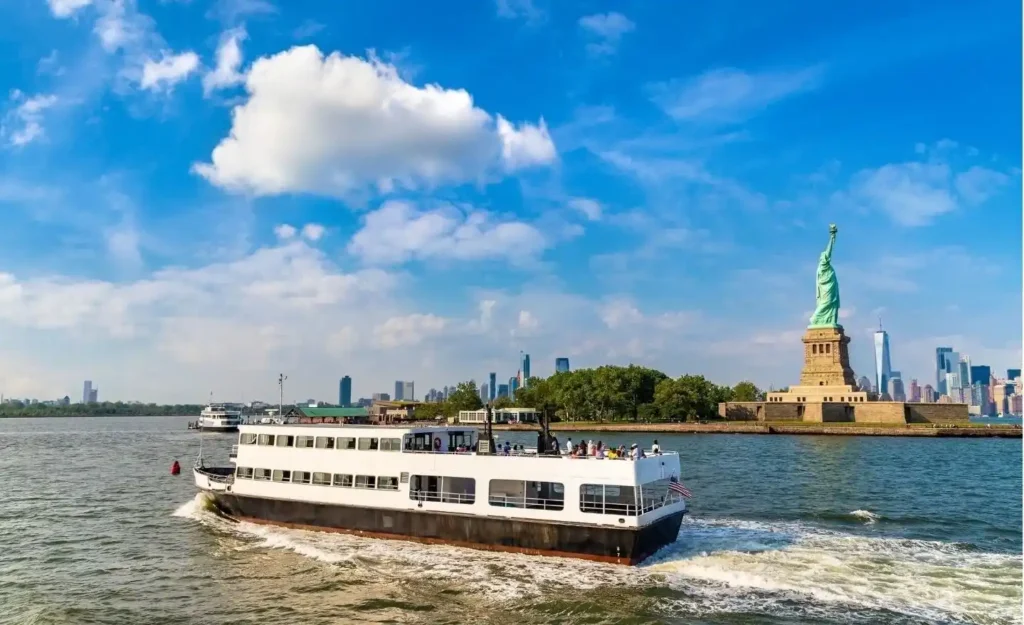
Show Image Alt text: Statue of Liberty standing on Liberty Island with the New York skyline in the background
This is the one attraction people assume they can “see from the water” and skip — don’t. Standing beneath Lady Liberty and walking through Ellis Island’s immigration museum gives you context for the rest of the city that no skyline photo can. Reserved (crown/pedestal) tickets sell out weeks ahead in peak season, so this is the first thing to book, not the last.
Real cost: Ferry + museum access starts around $24.30; pedestal access adds a few dollars; crown access requires booking months ahead for summer dates.
Insider tip: Take the first ferry of the day (around 8:30 a.m.). Lines triple by 11 a.m., and the morning light on the harbor is genuinely better for photos.
2. Walk The High Line, Then Drop Into Chelsea Market

Show Image Alt text: Visitors walking along the High Line elevated park with greenery and Manhattan buildings on either side
The High Line is an elevated park built on a former freight rail line, running from Gansevoort Street up to Hudson Yards. It’s free, it’s shaded in parts, and it ends conveniently near Chelsea Market, where you can grab lobster rolls, ramen, or fresh oysters for lunch.
Mistake to avoid: Walking the entire 1.45-mile length in midsummer heat with no water. Most locals do it in the early morning or right before sunset.
3. Catch Sunset from the Empire State Building or Top of the Rock
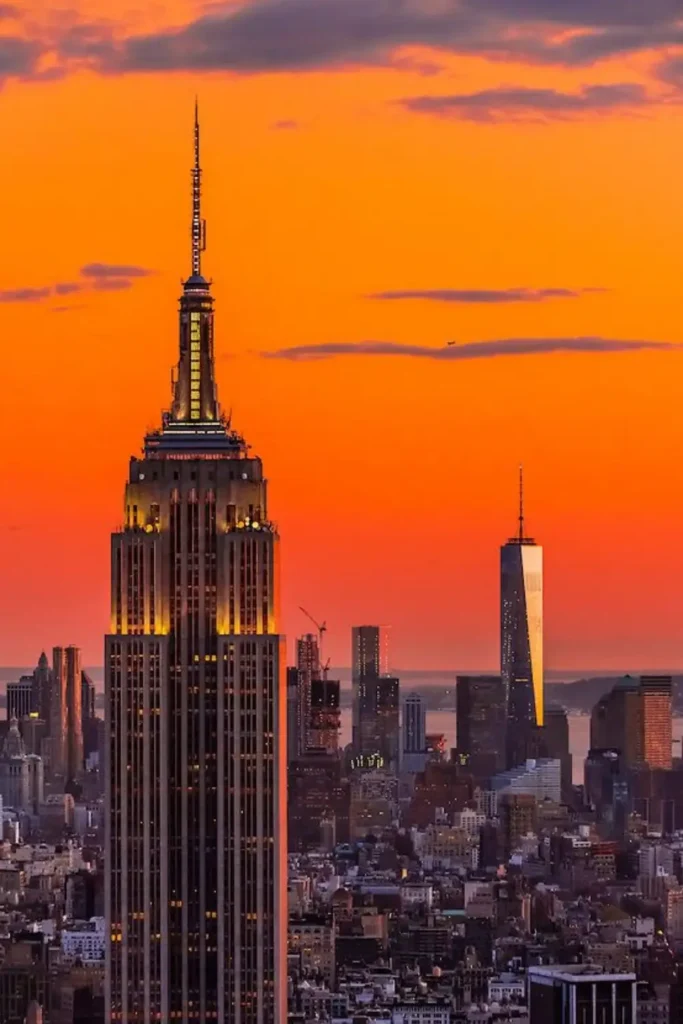
Show Image Alt text: Empire State Building glowing at sunset with the Manhattan skyline stretching into the distance
This is the genuinely “must-do” item on this list, but here’s what most guides don’t tell you: the Empire State Building gives you the Manhattan skyline including the Empire State Building itself in your photos (from Top of the Rock), while Top of the Rock gives you unobstructed views of the Empire State Building. If you only have time for one, choose based on which skyline photo you actually want.
Cost comparison:
| Observation Deck | Standard Ticket | Best For |
|---|---|---|
| Empire State Building | ~$44–$79 | Iconic building experience, Art Deco lobby |
| Top of the Rock | ~$40–$65 | Photos featuring the Empire State Building |
| Edge (Hudson Yards) | ~$38–$62 | Glass floor, western Manhattan views |
4. Spend a Full Day in Central Park
Show Image Alt text: Aerial view of Central Park’s green landscape surrounded by Manhattan skyscrapers
Central Park isn’t a “stop” — it’s 843 acres, and treating it like a quick photo op is one of the biggest mistakes first-timers make. Rent a rowboat at the Loeb Boathouse, walk through Bethesda Terrace, and cross over to Belvedere Castle for one of the best free views in the city.
Who should prioritize this: Families, nature lovers, and anyone who wants a break from Manhattan’s noise without leaving Manhattan.
5. Explore the Met’s Collections (Budget at Least 3 Hours)
Show Image Alt text: The Metropolitan Museum of Art’s grand entrance facade on Fifth Avenue
The Metropolitan Museum of Art holds over 1.5 million works, and no one sees it all in one visit. Instead of wandering aimlessly, pick two or three wings — Egyptian Art, European Paintings, and the rooftop garden (seasonal) are consistently the highest-value picks for first-time visitors.
Cost note: Admission is officially “pay what you wish” only for NY State residents; out-of-state visitors pay a suggested $30 admission, which most staff will actually enforce.
6. Visit the American Museum of Natural History
Show Image Alt text: American Museum of Natural History building exterior facing Central Park West
Right across Central Park from the Met, this museum is a genuinely different experience — dinosaur fossils, the Hayden Planetarium, and the Blue Whale model in the Milstein Hall. It pairs naturally with a Central Park morning.
7. Walk Through Times Square (But Don’t Linger)
Show Image Alt text: Times Square lit up at night with bright neon billboards and crowds of people
Times Square is worth seeing once for the sheer sensory overload of it, especially at night when the billboards are lit. Most New Yorkers will tell you honestly: 20 minutes is enough. It’s crowded, costumed characters will ask for tips after photos, and food nearby is overpriced.
Mistake to avoid: Eating a sit-down meal in Times Square itself. Walk two blocks in any direction for better food at half the price.
8. See Rockefeller Center and St. Patrick’s Cathedral Together
Show Image Alt text: Rockefeller Center’s plaza with St. Patrick’s Cathedral’s Gothic spires visible nearby
These two sit a block apart, so pair them. Rockefeller Center is famous for its ice rink in winter and its Art Deco architecture year-round; St. Patrick’s Cathedral, just across Fifth Avenue, offers a quiet, free contrast — genuinely one of the most striking Gothic Revival interiors in the U.S.
9. Pay Respects at the 9/11 Memorial & Museum
Show Image Alt text: 9/11 Memorial reflecting pool with names of victims engraved around the edge
The two reflecting pools sitting in the footprints of the original towers are free to visit and open daily. The museum itself (paid entry) is emotionally heavy but widely considered one of the most well-curated museums in the city.
Practical tip: Budget at least 2 hours for the museum. Rushing through it defeats the purpose.
10. Wander the Financial District and Wall Street
Show Image Alt text: The bronze Charging Bull statue on a Wall Street cobblestone street
Beyond the famous Charging Bull statue, the Financial District has some of Manhattan’s oldest architecture, including Trinity Church and the Federal Hall where George Washington was inaugurated. It’s a quieter, more historic side of downtown that most itineraries skip entirely.
11. Unwind at Bryant Park (Especially at Night)
Show Image Alt text: Bryant Park’s green lawn and seating area surrounded by Midtown skyscrapers
Tucked behind the New York Public Library, Bryant Park transforms by season — an ice rink and holiday market in winter, free outdoor movies in summer, and a genuinely peaceful reading room in between. It’s one of the few Midtown spots that feels unhurried.
12. People-Watch and Catch Live Music at Washington Square Park
Show Image Alt text: The iconic marble arch at Washington Square Park with people gathered around the fountain
This is Greenwich Village’s social hub — street performers, chess hustlers, NYU students, and the iconic arch all in one square. Evenings here, especially in warmer months, often feature genuinely impressive live musicians.
13. Cross the Brooklyn Bridge on Foot (Not the Subway)
Show Image Alt text: People walking along the Brooklyn Bridge pedestrian walkway with Manhattan skyline behind them
Walking from Manhattan to Brooklyn across this bridge takes about 40 minutes and delivers one of the best skyline views in the entire city — and it’s completely free. End in DUMBO for the famous Instagram shot of the Manhattan Bridge framed between two buildings on Washington Street.
Insider tip: Walk it early morning (before 9 a.m.) to avoid the tourist crush and cyclists weaving through pedestrians.
14. Catch a Broadway or Off-Broadway Show
Show Image Alt text: Broadway theater district lit up at night with marquee lights and crowds
Broadway is genuinely worth the splurge for at least one show. If full-price tickets ($100–$300+) feel steep, use the TKTS booth in Times Square for same-day discounted seats (typically 20–50% off), or enter individual show lotteries through apps like Today Tix.
15. Explore One Outer Borough Beyond Manhattan
Show Image Alt text: Colorful street art mural on a building wall in Williamsburg, Brooklyn
This is the item competitors consistently leave off “top 15” lists, and it’s a genuine gap. Manhattan is not all of New York. Spend at least half a day in Williamsburg or Bushwick (Brooklyn) for street art and independent food, or Astoria (Queens) for one of the best Greek and Mediterranean food scenes in the country.
Where to Stay in New York City
| Area | Best For | Avg. Price/Night |
|---|---|---|
| Midtown Manhattan | First-timers, walkability to major sights | $250–$450 |
| Chelsea | Boutique hotels, near High Line | $220–$400 |
| Brooklyn (Williamsburg) | Budget travelers, nightlife, local vibe | $150–$300 |
| Long Island City, Queens | Best value, 1 subway stop from Manhattan | $130–$250 |
Most travelers don’t know this: staying in Long Island City often costs 30–40% less than an equivalent Midtown hotel, with a subway ride into Manhattan under 10 minutes.
What to Eat and Drink in New York City
New York’s food scene isn’t about fine dining alone — some of the best meals in the city cost under $10.
- Los Tacos No. 1 (Chelsea Market) — widely regarded as some of the best street tacos outside Mexico City; expect a line, it moves fast.
- Xi’an Famous Foods — hand-ripped noodles with cumin lamb, a Flushing export that became a citywide chain without losing quality.
- $1.50 Fresh Pizza — a genuine NYC institution; a folded slice for under $2 is still possible if you know where to look.
- Halal carts (like Adel’s Famous Halal Food) — chicken and rice platters with white and hot sauce are a lunchtime staple for a reason.
- Katz’s Delicatessen — pricier, but the pastrami sandwich is a legitimate NYC landmark, not just hype.
Budget tip: If you’re eating out three meals a day, alternating one street-food meal with one sit-down meal typically saves $30–$50/day compared to eating at restaurants for every meal.
Best Time to Visit New York City
| Season | Weather | Crowd Level | Notes |
|---|---|---|---|
| Spring (Apr–Jun) | Mild, 55–75°F | Moderate | Cherry blossoms in Central Park, ideal walking weather |
| Summer (Jul–Aug) | Hot, humid, 80–90°F | High | Free outdoor events, but subways get uncomfortably hot |
| Fall (Sep–Nov) | Crisp, 50–70°F | Moderate | Best photography light, fall foliage in Central Park |
| Winter (Dec–Feb) | Cold, 25–40°F | Very high (Dec), low (Jan–Feb) | Holiday markets and Rockefeller tree in December; best hotel deals in January |
How Much Does a Trip to New York City Cost?
Sample daily budget (mid-range, per person):
- Hotel (split two ways): $125
- Food (mix of street food + 1 sit-down meal): $65
- Attractions/activities: $60
- Subway/transport: $12
- Total: ~$262/day
Sample daily budget (budget traveler):
- Hostel: $50
- Food (mostly street food/delis): $35
- Free attractions + 1 paid: $20
- Subway (7-day pass amortized): $5
- Total: ~$110/day
How to Get to New York City
Three major airports serve the city: JFK (best for international flights, ~1 hour to Manhattan via AirTrain + subway), LaGuardia (domestic flights, closer to Manhattan but limited transit), and Newark (EWR) in New Jersey (often cheaper flights, easy AirTrain + NJ Transit connection).
Mistake to avoid: Taking a taxi straight from JFK during rush hour. The AirTrain + subway combo costs under $11 total and is often faster than sitting in traffic on the Van Wyck Expressway.
How to Get Around New York City
The subway is the backbone of getting around, running 24/7 across all five boroughs. A single ride is $2.90, but a 7-day unlimited MetroCard (~$34) pays for itself after about 12 rides — meaning most multi-day visitors should buy one on arrival.
Walking is genuinely the best way to experience Manhattan below 59th Street; the grid layout makes navigation simple, and many “far apart” attractions on a map are actually a 15-minute walk.
How Many Days to Spend in New York City
- 2 days: Enough for Midtown highlights and one museum — expect to feel rushed.
- 4–5 days: The sweet spot for most first-timers — covers Manhattan’s core neighborhoods plus one outer-borough half-day.
- 7+ days: Allows genuine exploration of Brooklyn, Queens, and lesser-known neighborhoods without feeling like a checklist trip.
Common Mistakes First-Time Visitors Make
- Not booking Statue of Liberty or observation deck tickets in advance — same-day tickets often mean 2+ hour waits or sold-out slots.
- Trying to see all five boroughs in 3 days — this leads to more subway time than sightseeing time.
- Eating every meal in Times Square or near major attractions — prices are inflated 30–50% compared to two blocks away.
- Underestimating walking distances — NYC blocks look short on a map but add up; wear broken-in shoes.
- Visiting Central Park for “10 minutes” — it’s larger than Monaco; treating it as a photo stop wastes its real value.
Pros and Cons of Visiting New York City
Pros:
- Unmatched density of world-class museums, food, and culture in a walkable area
- 24/7 public transit means no “the city shuts down” moments
- Something genuinely fits every budget, from $1.50 pizza to Michelin-starred tasting menus
Cons:
- Among the most expensive U.S. cities for lodging
- Can feel overwhelming and fast-paced for first-time solo travelers
- Peak season crowds at major attractions require advance planning
Who Should Visit New York City
New York rewards travelers who like structured but flexible days — it’s not a lie-on-the-beach destination. First-time visitors, museum lovers, foodies, theater fans, and anyone chasing a genuine “big city” experience will get the most out of it. Travelers seeking a slow, quiet pace may find it more enjoyable paired with a calmer add-on trip, like the Hudson Valley or the Hamptons, afterward.
Final Verdict
New York City lives up to its reputation, but only if you plan around neighborhoods instead of chasing a scattered bucket list. Prioritize the Statue of Liberty, one observation deck at sunset, a full day in Central Park, the High Line into Chelsea Market, and at least one outer-borough neighborhood — that combination alone captures what makes this city genuinely different from anywhere else. Everything beyond that is a bonus, not a requirement.
Frequently Asked Questions
1. What is the best time of year to visit New York City? Spring (April–June) and fall (September–November) offer the best combination of mild weather and manageable crowds. Summer is hot and crowded; December is beautiful but extremely busy and pricier for hotels.
2. How many days do you need in New York City? Four to five days is ideal for first-time visitors to cover Manhattan’s major neighborhoods without rushing. Two days is workable but limits you to Midtown highlights only.
3. Is New York City expensive to visit? Yes, compared to most U.S. cities — expect $100–$150/day on a tight budget or $200–$350/day for a comfortable mid-range trip, with lodging being the biggest cost driver.
4. Do I need to book tickets in advance for NYC attractions? Yes, especially for the Statue of Liberty, Empire State Building, Broadway shows, and Edge/Top of the Rock. Booking 2–3 weeks ahead avoids sold-out dates and long same-day lines.
5. What’s the best way to get around New York City? The subway is fastest and cheapest, running 24/7 with a 7-day unlimited pass around $34. Manhattan below 59th Street is also highly walkable due to its grid layout.

Flightour is a travel platform that helps you discover top destinations, hidden gems, and expert travel tips worldwide. We make travel simple, affordable, and unforgettable—whether you’re planning a solo trip, family vacation, or a dream getaway.
Explore more, travel better with Flightour.