

Spirit Airlines is gone. Southwest charges for bags now. And the “cheap” fare you saw on Google Flights this morning might cost $150 more by the time you’re standing at the gate. If you’re trying to figure out which budget airline actually deserves your money in 2026 — not which one just has the lowest sticker price — you’re asking the right question.
Quick Answer
For most domestic trips in 2026, Southwest Airlines is the best all-around budget pick because its total trip cost (fare + bags + changes) still beats the ultra-low-cost carriers once you add up their fees. If you’re a true one-bag traveler chasing the absolute lowest fare, Breeze Airways and Avelo Airlines offer the cheapest point-to-point tickets on routes they serve, while Frontier and Allegiant remain the lowest base fares nationwide — as long as you pack light and avoid the gate-fee trap.
Quick Facts: Budget Airlines in the US (2026 Snapshot)
| Airline | Type | First Checked Bag | Carry-On Fee | Change/Cancel Fee | Best For |
| Southwest Airlines | Low-cost | $45 (as of May 2025) | Free | $0 | Flexibility, no-fee changes |
| Breeze Airways | Hybrid low-cost | ~$35–$60 | ~$25–$45 | Low/flexible | Smaller cities, newer planes |
| Avelo Airlines | Ultra-low-cost | ~$45 | ~$44 | Free until 15 min before departure | Point-to-point, on-time performance |
| Frontier Airlines | Ultra-low-cost | $55 online / $99 at gate | $59 online / $99 at gate | Varies by fare | Rock-bottom base fares |
| Allegiant Air | Ultra-low-cost | $15–$70 | $10–$75 | Varies by fare | Small-city-to-leisure routes |
| JetBlue Airways | Hybrid low-cost | ~$45–$50 (dynamic pricing) | Free (Blue Basic: 1 personal item only) | Varies by fare | Comfort on a budget |
| Sun Country Airlines | Ultra-low-cost | ~$40–$60 | ~$40–$60 | Varies by fare | Leisure/seasonal routes |
| ~~Spirit Airlines~~ | Discontinued (May 2026) | — | — | — | No longer flying |
Fees change often and vary by route, season, and how far in advance you book. Always confirm current pricing on the airline’s own site before booking.
What Happened to Spirit Airlines? (And Why It Matters for Your Search)
If you’re comparing budget airlines in 2026, you need to know this upfront: Spirit Airlines shut down in early May 2026, after filing for Chapter 11 bankruptcy for a second time in August 2025. A rescue deal reportedly fell apart earlier in the year, and Spirit ceased operations for good. That single event reshaped the entire budget travel landscape — fares on former Spirit routes jumped by double digits within weeks as the remaining carriers absorbed displaced demand.
Most travelers don’t know this, but that shakeup is exactly why airlines like Breeze and Avelo have been so aggressive about picking up new routes over the past year. When one low-cost carrier disappears, the survivors don’t just benefit — they scramble to grab the market share before a legacy airline does.
Why Budget Airlines Still Matter in 2026 (Even With Rising Fees)
Every major US carrier raised baggage fees at some point in 2026 — United moved first in April, American followed shortly after, and even Southwest’s famous “bags fly free” policy ended back in May 2025. On paper, that makes it look like budget flying isn’t “budget” anymore.
Based on travel insights from comparing dozens of domestic routes, here’s the reality: legacy carriers (Delta, American, United) now charge roughly the same $45–$50 for a first checked bag as some of the low-cost carriers do. The real gap between “budget” and “legacy” isn’t the bag fee anymore — it’s the base fare, the change policy, and the seat pitch. That’s where budget airlines still win, sometimes by $100 or more round-trip on the same route.
The Best Budget Airlines for Domestic Flights (Ranked by Total Trip Value)
1. Southwest Airlines — Best Overall for Total Cost
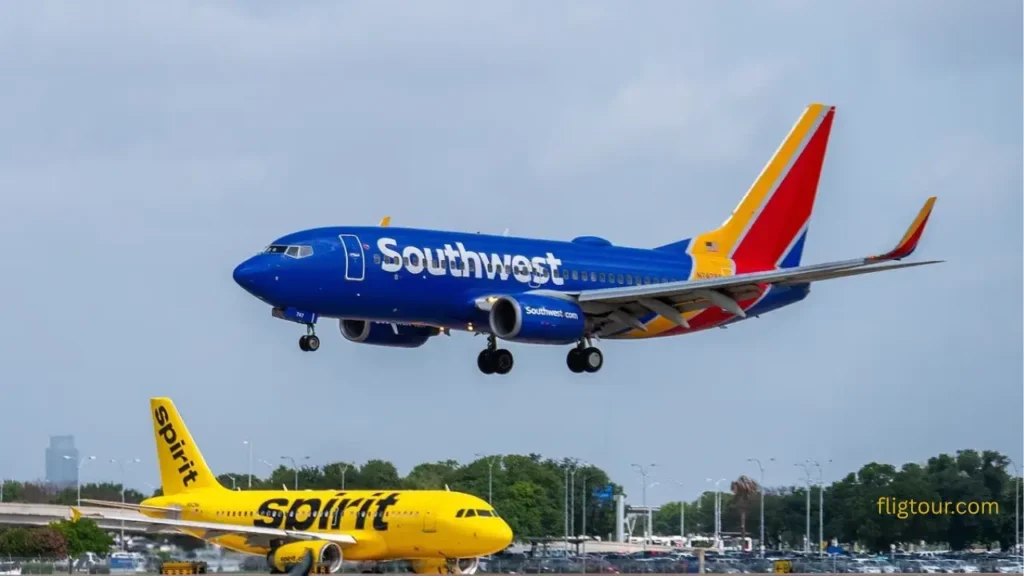
Southwest lost its two-free-checked-bags perk in 2025, and that was genuinely a big deal — it was one of the last things separating Southwest from every other airline in the sky. But here’s what most comparison articles miss: Southwest still doesn’t charge change fees or cancellation fees, and it never has. That single policy alone can save you $100–$300 if your plans shift, which happens more often than travelers like to admit.
Highlights:
- No change fees, no cancellation fees, ever
- Open seating (no seat-selection upcharge, though boarding position matters — more on that below)
- Extensive domestic network with strong hub coverage in Texas, the Southwest, and the Midwest
- Rapid Rewards points don’t expire as long as you keep flying
The catch: Southwest’s Wanna Get Away Plus and Anytime fares still cost more than a bare-bones Frontier or Allegiant fare. You’re paying a premium for flexibility — which is worth it only if there’s a real chance your plans change.
2. Breeze Airways — Best for Underserved Smaller Cities
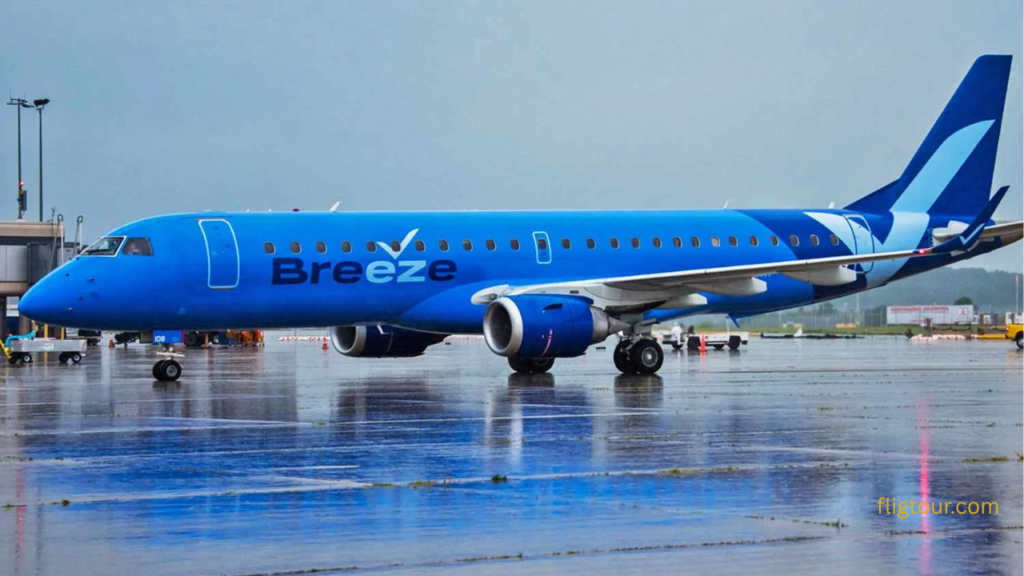
Founded by JetBlue’s original founder, David Neeleman, Breeze has quietly become one of the fastest-growing airlines in the country by doing something the legacy carriers won’t bother with: flying point-to-point between mid-sized cities that usually require a connection. Breeze now serves more than 300 routes across 76 cities in 34 states, and it recently reported its second consecutive profitable quarter — a rarity for a startup carrier.
Highlights:
- Newer Airbus A220 fleet with extra-legroom seating and inflight Wi-Fi
- Three fare tiers (Nice, Nicer, Nicest) that let you choose exactly how much flexibility and comfort you want to pay for
- Aggressively expanded into West Coast markets that Avelo abandoned in late 2025, often with introductory fares as low as $39 one-way
- A generous, genuinely flexible change and cancellation structure compared to most ULCCs
Who this is for: Travelers flying between smaller or mid-sized cities — think Burbank to Redmond, or Cincinnati to Portland, Maine — where legacy carriers would force you through a hub and double your travel time.
3. Avelo Airlines — Best for On-Time Reliability
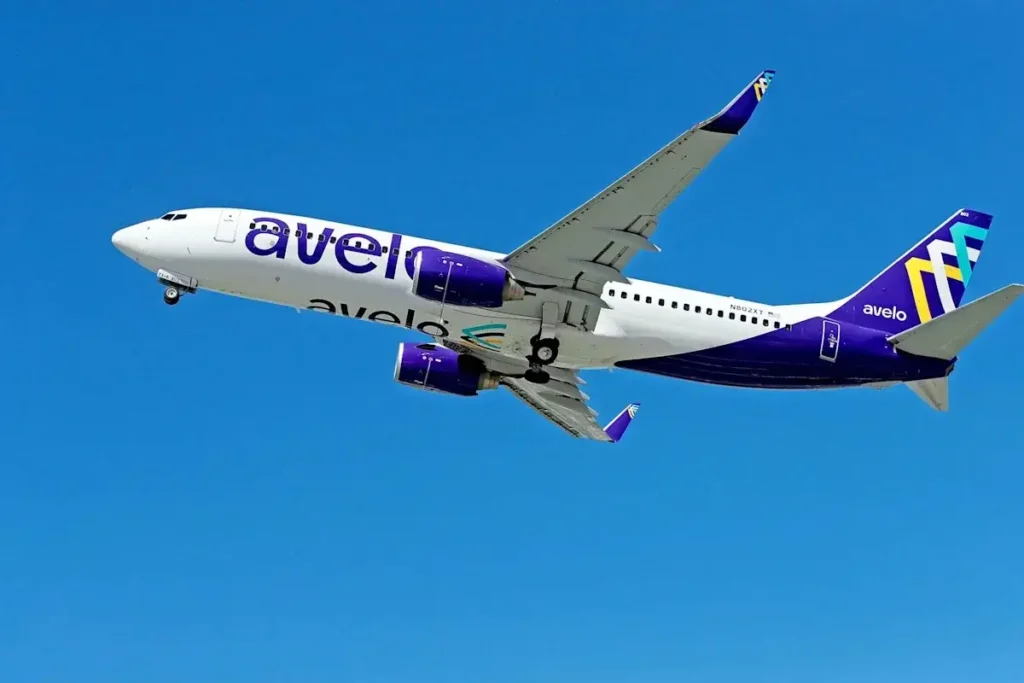
Avelo built its reputation on point-to-point routes out of secondary airports (Tweed-New Haven, Wilmington, Lakeland, Concord-Padgett near Charlotte), and it has consistently ranked at or near the top of the industry for on-time performance. Its change policy is also unusually generous for a ULCC: you can modify or cancel online for free up until 15 minutes before departure.
Highlights:
- Free personal item on every fare
- Best-in-class on-time performance among budget carriers
- Fifth operating base added at Dallas-area McKinney National Airport in 2026
- Simple, transparent bundle called Avelo Plus ($49/year) that includes fare discounts and priority boarding
A word of caution: Avelo has been retrenching, not expanding, in some markets. It exited its entire West Coast network by the end of 2025 and closed bases in Wilmington and Raleigh-Durham in early 2026, cutting its overall schedule by close to 29% between April and June. Before booking, double-check that your specific route is still active — this is a mistake several travelers made in early 2026 when routes disappeared with only a few weeks’ notice.
4. Frontier Airlines — Lowest Base Fares, If You Pack Light
Frontier remains the carrier most likely to show the cheapest number on a flight search. The catch is that Frontier’s a la carte pricing model means almost everything beyond your seat and a personal item costs extra — and those fees scale up fast if you buy them at the airport instead of online.
Highlights:
- Base fares regularly the lowest available on shared routes
- Extensive domestic network out of its Denver hub
- Frontier Miles loyalty program with a straightforward all-you-can-fly annual pass some seasons
The math you need to do: A carry-on booked online runs about $59, but jumps to as much as $99 if you wait until the gate. A first checked bag follows the same pattern — $55 online, up to $99 at the airport. Seat selection adds another $17 and up. Add those together and Frontier’s headline fare advantage can evaporate completely if you don’t plan ahead.
5. Allegiant Air — Best for Small-City-to-Vacation-Spot Routes
Allegiant’s entire business model is built around connecting smaller Midwestern and regional airports directly to leisure destinations like Florida beach towns and Las Vegas — routes no other carrier bothers to fly nonstop. If you live near one of Allegiant’s underserved home airports, it can be genuinely the only nonstop option to your destination.
Highlights:
- Direct routes from smaller cities that otherwise require a connection through a hub
- Frequently the cheapest total fare on leisure-heavy routes during off-peak booking windows
- Allegiant Extra bundle available for travelers who want bags and seat selection included upfront
The catch: Limited schedules (sometimes just a couple of flights per week) mean far less flexibility if your travel dates shift. Bag fees also range widely — from $15 to $70 for a first checked bag — depending on the route and how early you book.
6. JetBlue Airways — Best for Comfort at a Budget Price
JetBlue sits in an unusual middle ground: it’s priced like a low-cost carrier but flies like a legacy one, with free seat-back entertainment, generally more legroom, and complimentary snacks and drinks even on its cheapest fares. Its Blue Basic fare is the budget option, though it comes with the tightest restrictions — no seat selection, no changes on some fare classes, and a bag fee that shifts with peak and off-peak dynamic pricing.
Highlights:
- More comfortable cabin experience than any ULCC
- TrueBlue points program with useful transfer partners
- Free Wi-Fi on most aircraft, a rarity among budget-focused carriers
7. Sun Country Airlines — Best for Seasonal Leisure Routes
Sun Country runs a hybrid model: scheduled passenger service most of the year, supplemented by seasonal leisure routes to warm-weather and ski destinations. Base fares can be attractively low, but the airline leans heavily on a la carte pricing similar to Frontier and Allegiant, so the total cost adds up quickly if you’re checking bags or need flexibility.
Highlights:
- Useful for Minneapolis-area travelers as the airline’s home hub
- Seasonal routes to destinations like ski resorts and Caribbean getaways that other budget carriers skip
Cost Breakdown: What a “Budget” Ticket Actually Costs
A $49 headline fare rarely stays $49. Here’s a realistic all-in cost breakdown for a one-way domestic flight with one carry-on and one checked bag, based on 2026 published fee schedules:
| Airline | Base Fare (avg.) | + Carry-On | + Checked Bag | + Seat Selection | Realistic All-In Total | |
| Southwest | $89 | Free | $45 | Free (open seating) | ~$134 | |
| Breeze | $59 | ~$30 | ~$45 | ~$15 | ~$149 | |
| Avelo | $49 | ~$44 | ~$45 | ~$12 | ~$150 | |
| Frontier | $39 | $59 | $55 | $17 | ~$170 | |
| Allegiant | $45 | $40 | $40 | $15 | ~$140 |
Most travelers don’t know this: once you add a carry-on, a checked bag, and a seat assignment, the “cheapest” ULCC fare is often within $20–$30 of Southwest’s all-in price — but Southwest hands you free changes and no cancellation fee on top of that. That’s why total trip cost, not the headline fare, should be your comparison metric.
Best Time to Book Budget Domestic Flights
- Book 3–6 weeks out for the best fare-to-flexibility balance on most domestic routes; budget carriers release their deepest discounts in irregular flash sales, so setting a fare alert matters more than picking a “perfect” day of the week.
- Tuesday and Wednesday departures still tend to run cheaper than Friday and Sunday on ULCCs, since business and leisure demand both dip midweek.
- Avoid booking within 14 days of departure on Frontier, Allegiant, or Spirit-style ULCCs — this is exactly when gate fees for bags and seats kick in hardest, and last-minute fare inflation erases any “budget” advantage.
- Watch for route-exit sales. When a carrier drops a route (as Avelo did on the West Coast), competitors like Breeze often flood in with introductory fares as low as $39 one-way for a limited window. These sales disappear fast.
Practical Tips for Flying Budget Airlines in the US
- Always price out the bag fee before you compare fares. Use each airline’s own site (not just an aggregator) to see the true bundled price, since aggregators sometimes only show the base fare.
- Buy bags online, never at the gate. The gap between prepaid and gate pricing on Frontier alone can be $40 or more per bag, each way.
- Screenshot your boarding pass and confirmation. Budget carrier apps and websites have had more outages during peak travel periods than legacy carrier systems — a saved screenshot has bailed out plenty of travelers during a system hiccup.
- Check the actual airport, not just the city name. Allegiant, Avelo, and Breeze frequently fly out of secondary airports (Concord-Padgett instead of Charlotte-Douglas, Wilmington instead of Philadelphia) that can add 45+ minutes of driving.
- Join the free loyalty program even if you rarely fly that airline. Several budget carriers send members first access to flash sales before they go public.
Common Mistakes to Avoid
- Booking a ULCC fare for a route you might need to change. If there’s any chance your dates will shift, the “savings” disappear the moment you pay a modification fee on top of a fare difference.
- Ignoring the personal item size limit. Nearly every budget carrier strictly enforces personal item dimensions at the gate, and a bag that’s even an inch over can trigger a full carry-on fee on the spot.
- Assuming the cheapest search result is the cheapest total price. Aggregator sites often default to the bare fare without bags — always click through to see the real total before you commit.
- Booking a connecting itinerary on two separate budget airline tickets. If your first flight is delayed, most budget carriers won’t rebook you onto the second ticket, since it’s technically a separate reservation. This is one of the costliest mistakes travelers make trying to save money on a multi-leg trip.
- Not checking whether your route survived a network cut. As Avelo’s 2026 restructuring showed, budget carriers add and drop routes far more often than legacy airlines. Confirm your exact route is still flying before you make non-refundable hotel or event bookings.
Pros and Cons of Flying Budget Airlines
Pros:
- Meaningfully lower base fares on the same domestic routes as legacy carriers
- Direct access to smaller cities and secondary airports that hub-based airlines skip
- Southwest and some Breeze fares still offer real flexibility without extra fees
- Newer aircraft on some carriers (Breeze’s A220s, for example) can mean a more comfortable ride than an aging legacy narrow-body
Cons:
- A la carte pricing on ULCCs can erase the fare advantage once bags and seats are added
- Thinner schedules mean fewer rebooking options if something goes wrong
- Route networks change frequently — a route that exists this year may not exist next year
- Secondary airports can add real time and cost to your overall trip via longer drives or rideshare fares
Who Should Choose Which Budget Airline
- Choose Southwest if you value flexibility and might need to change your trip, or if you’re checking two bags and want to avoid a la carte pricing entirely.
- Choose Breeze or Avelo if you’re a light packer flying between smaller or secondary cities and want the lowest possible point-to-point fare with a decent onboard experience.
- Choose Frontier or Allegiant if your dates are locked in, you’re carrying only a personal item, and you’re comfortable prepaying every add-on well in advance.
- Choose JetBlue if you want a legacy-airline feel (free entertainment, more legroom, free Wi-Fi) without paying full legacy-airline prices.
- Skip any ULCC entirely if your trip has a hard, non-negotiable arrival time — thinner schedules mean fewer same-day rebooking options if a flight is delayed or canceled.
Final Verdict
There’s no single “best” budget airline in 2026 — there’s a best budget airline for your specific trip. If you want the safest all-around bet with genuine flexibility, Southwest still earns that spot even without free checked bags. If you’re chasing the lowest possible fare and you’re comfortable packing light and booking everything online in advance, Breeze, Avelo, Frontier, and Allegiant all have a case depending on which cities you’re flying between. The one thing every experienced budget traveler agrees on going into 2026: never trust the headline fare — always calculate the all-in price before you book.
Frequently Asked Questions
Is Southwest Airlines still a budget airline in 2026? Yes, though it’s no longer the bag-fee-free outlier it used to be. Southwest ended its two-free-checked-bags policy in May 2025 and now charges around $45 for a first bag. It remains budget-friendly because it still charges no change or cancellation fees, which can offset the new bag cost.
What happened to Spirit Airlines? Spirit Airlines shut down completely in early May 2026 after filing for Chapter 11 bankruptcy for a second time in August 2025. A potential rescue deal did not go through, and the airline ceased all operations, removing one of the lowest-fare options from the US market.
Which budget airline has the cheapest checked bag fees in 2026? Fees vary by route and how far in advance you book, but Allegiant’s checked bag fees start as low as $15 on some routes, while Southwest’s flat $45 fee is more predictable across its whole network. Frontier and Allegiant both offer the lowest fees when booked well in advance online.
Are ultra-low-cost carriers like Frontier and Avelo actually cheaper than Southwest? Sometimes, but often not once you add a carry-on, checked bag, and seat selection. Once those a la carte fees stack up, the total price frequently lands within $20–$30 of Southwest’s all-in cost, and Southwest still offers free changes and cancellations on top of that.
What’s the best budget airline for flying to a smaller city that legacy airlines don’t serve? Breeze Airways and Avelo Airlines both specialize in point-to-point routes to smaller and mid-sized cities that typically require a connection on legacy carriers. Breeze has been expanding its network, while Avelo has cut some regions in 2026, so it’s worth confirming your specific route is still active before booking either one.

Flightour is a travel platform that helps you discover top destinations, hidden gems, and expert travel tips worldwide. We make travel simple, affordable, and unforgettable—whether you’re planning a solo trip, family vacation, or a dream getaway.
Explore more, travel better with Flightour.